EDUCATION FOR SUSTAINABILITY
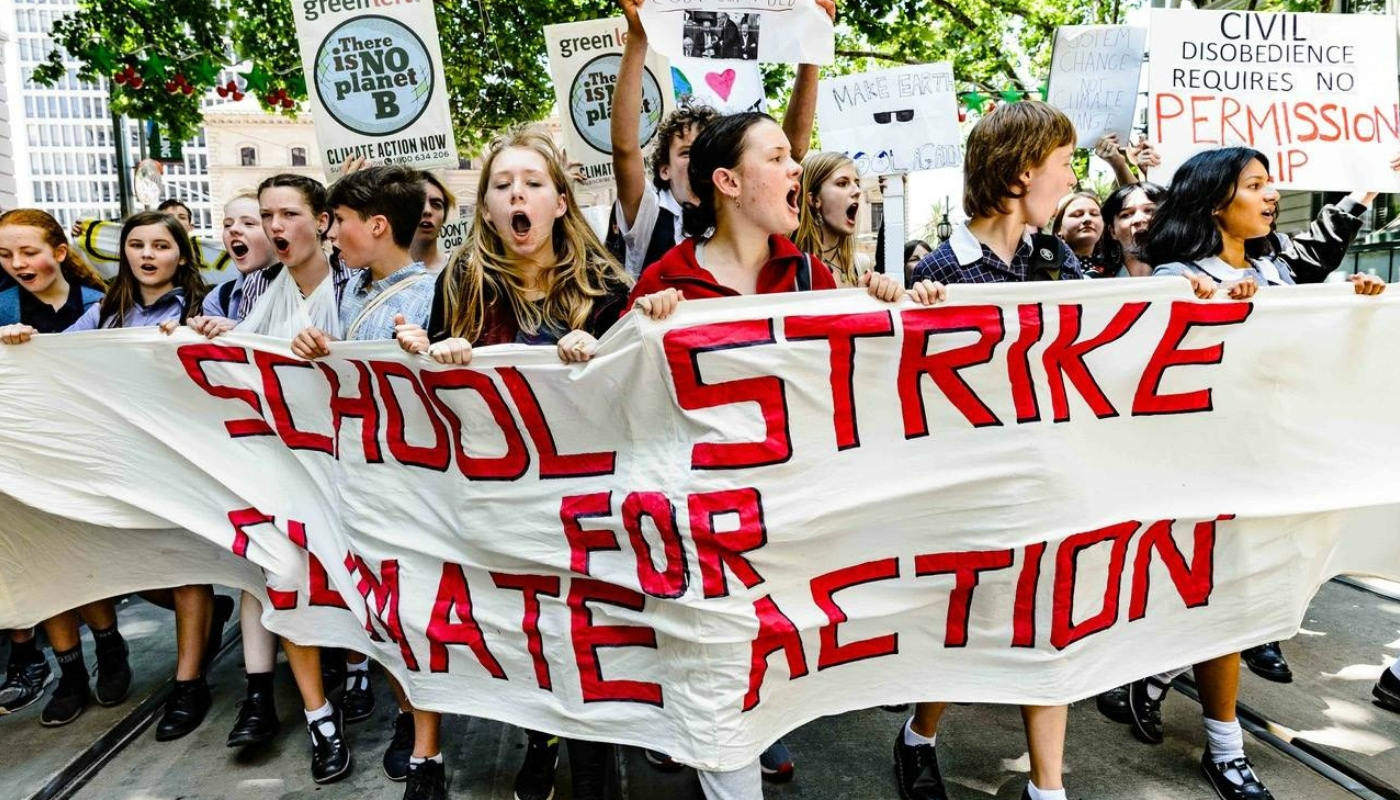 |
| Figure 1: https://www.acf.org.au/kids_strike_hobart_19 |
Within the curriculum, students will explore the content descriptors ACHASSK141 (see Figure 2) and ACHASSK14 (see Figure 3) (Australian Curriculum, Assessment and Reporting Authority (ACARA), 2017.
 |
| Figure 2: (Australian Curriculum, Assessment and Reporting Authority (ACARA), 2017) |
 |
| Figure 3: (Australian Curriculum, Assessment and Reporting Authority (ACARA), 2017) |
Students will investigate more about the importance of safeguarding the environment for the future generations (Kriewaldt & Taylor, 2012). Using the inquiry question "What is climate change and why does it matter?", students will investigate using the Internet to research the effects of climate change and how it is impacting our world today. They will explore why young people all over the world felt the need to come together and protest, and what the governments around the world are doing about climate change. Students will also research what other countries are doing to create a more sustainable future and what Australia can do to improve its impact on the environment in relation to their findings.
To support students to think sustainably when participating in this unit of work, I encourage you to spend time with your child to look at the sustainable choices suggested by the Victorian government (2011) you can make within your home, to contribute to a more environmentally friendly atmosphere. This will also help the students to bring in their practical experience in presenting sustainable ideas in the classroom and school community and how everyone can play a small role in a more sustainable future (Leslie, 2009).
On one day, every student in the school will keep their rubbish (excluding food scraps) for collection by the Grade 6 students. Using the rubbish, Year 6 will create a giant rainbow to present to the whole school assembly on how much waste there is in a day, and come up with proposals of possible solutions (eg. recycling, reusable containers instead of throwaway packaging, etc.) and suggestions on ways everyone can help to create a more sustainable school community. This is an important concept for children to grasp, as this will increase their realisation and knowledge of the need to protect our environment for the future (Commonwealth of Australia, 2005). It would be a great support to the students also if you would come to the school assembly to see what solutions your children have come up with to make our school a more sustainable place.
When administered together, Geography, Sustainability and CCE, encourage students' understandings of contemporary issues and equips them to form informed actions which have an effect on society (Casinadar, 2015). Through students realising the huge impact they have in current environmental issues as shown in the global school strike, students can also make small sustainable changes in their daily lives, collectively with others and positively influence our future.
Word Count: 499
References
Australian Curriculum, Assessment and Reporting Authority (ACARA). (2017). HASS.Retrieved from Australian Curriculum: https://www.australiancurriculum.edu.au/f-10-curriculum/humanities-and-social-sciences/hass/?year=12101&year=12102&strand=Inquiry+and+skills&strand=Knowledge+and+Understanding&capability=ignore&capability=Literacy&capability=Numeracy&capability=Informatio
Casinader, N. (2015). Geography and the Australian Curriculum: Unfulfilled knowledges in secondary education. Geographical Research, 53 (1), 95-105.
Commonwealth of Australia. (2005). Educating for a Sustainable Future: A National Environmental Education Statement for Australian Schools. Carlton South, VIC: Curriculum Corporation.
Kriewaldt, J., & Taylor, T. (2012). Geography and history’s role in education for sustainability. In Tony, T., Fahey, C., Kriewaldt, L., & Boon, D. (Eds.), Place and time: Explorations in teaching geography and history (pp. 341-354). Frenchs Forest, NSW: Pearson Education.
Leslie, A. (2009). Sustainable communities: the role of global citizenship education. POLIS.
Victoria State Government. (2011). Climate change, what you can do. Retrieved from Better Health Channel: https://www.betterhealth.vic.gov.au/health/HealthyLiving/climate-change-what-you-can-do


Hi Pearl,
ReplyDeleteWhat a heated topic to delve into! Love that you include a recent and relevant article to begin with.
The link to sustainable actions for the home is a great way to inform parents and make them feel part of the learning journey.
You have thought of a very creative way to use rubbish! Is there a rubbish problem at your school? I am just wondering if you will find enough in one day for an effective display? Good idea to invite parents to the assembly!
There is potential here to also look into the local council and how they manage waste in Launceston, this can further link with CCE.
Great way to link these topics together!
Kelsey
Thanks Kelsey,
DeleteI seem to not have made it clear on how the students will collect enough rubbish to make the rainbow. I did initially plan that the students go through the rubbish bins as well, but on second thought I feel that wouldn't be best, so I think I'll change it so that the students in every class will keep their wrappers and dry waste so that they can be collected to create the rainbow. I will definitely consider looking into the local council's role on waste management.
Pearl
Hey Pearl!
ReplyDeleteI love the stimulus you started with! Current and controversial topics are an excellent way to get students involved in CCE. I also like the focus on action by picking up rubbish around the school.
I wonder though, will there be enough rubbish around the school to make a large enough rainbow? Perhaps you could extend the rubbish collection to the community around the school too (which links with the citizenship part of CCE). A whole day is a lot of time; I think your students could make quite the difference in their community!
I really do like to link to global citizenship too; our students will be much more involved in the global community than any generation before, so this is a great way to get them participating in a meaningful way.
Well done Pearl!
Marcus
Hi Pearl,
ReplyDeleteI like that you have chosen a relevant topic such as climate change for your unit. Showing what other students are doing about this is great as I feel students will be even more interested now that they know there are others their own age who are concerned about this. The rainbow rubbish idea is cool, and I like that you've linked this to coming up with proposals for future. Have you considered looking deeper into this area, such as why we create so much waste? What is it about our lifestyle that means we have so much waste? The small steps of recycling and reusing are great starting points.
I did struggle to read the screen shots of the links to the Australian Curriculum, particularly the first one. Perhaps they could be increased in size or hyperlinked?
Great way of involving parents too - I think students would be so excited to have their parents see their display!
Nice work! Sarah
Thanks Sarah, I'll definitely see if I can fix the clarity of the screen shots. I like the idea of exploring why we have so much waste.
DeletePearl